
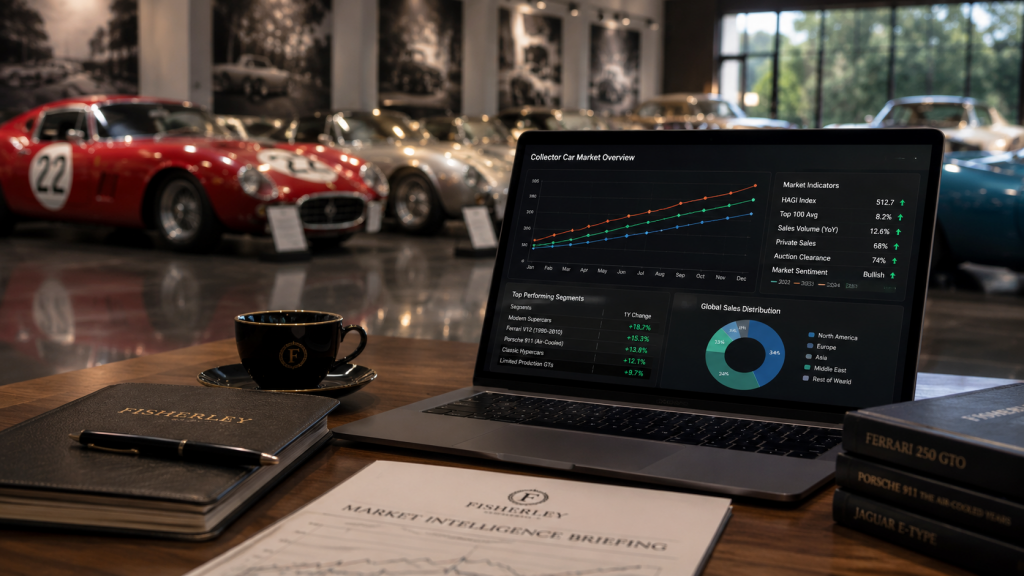
📍 ‘The collector-car market is no longer rewarding everything with a famous badge and an optimistic estimate.’
Ferrari remains dominant, analogue hypercars are strengthening, and modern classics are attracting fresh money.
The ordinary cars are still available.
The exceptional ones are becoming increasingly difficult to buy.
♔ Full Story
📍 ‘The market is not booming. It is becoming selective in a very expensive suit.’
▪️At the top end, Ferrari continues to set the pace. Cars such as the Enzo, F50, LaFerrari and F40 remain among the most desirable modern collectables.
▪️While exceptional competition-bred machinery is attracting serious capital.
▪️Recent European sales reinforced the point. A Ferrari 599XX Evo led RM Sotheby’s Tegernsee auction at more than €2.5 million, followed by a Ferrari 812 Competizione and Porsche Carrera GT.
▪️That is not a coincidence. It is the market rewarding rarity, naturally aspirated engines and cars built before software became the dominant engineering component.
♔ Why it matters:
▪️Buyers are still active, but increasingly forensic.
▪️Provenance, originality, mileage, colour and condition now decide whether a car attracts competitive bidding or merely polite interest.
▪️Modern classics from the 1980s through to the early 2000s remain one of the liveliest sectors.
▪️They combine nostalgia, usability and cultural recognition — qualities that younger collectors understand immediately.
▪️Traditional British classics face a tougher environment.
▪️Ageing buyer demographics, plentiful supply and ambitious restoration costs continue to restrain values.
♔ The Fisherley view: this is a flight to quality rather than a general market rise.
The exceptional car remains liquid, desirable, and globally relevant.
📍 ‘The mediocre car now needs a very persuasive salesman.’
