
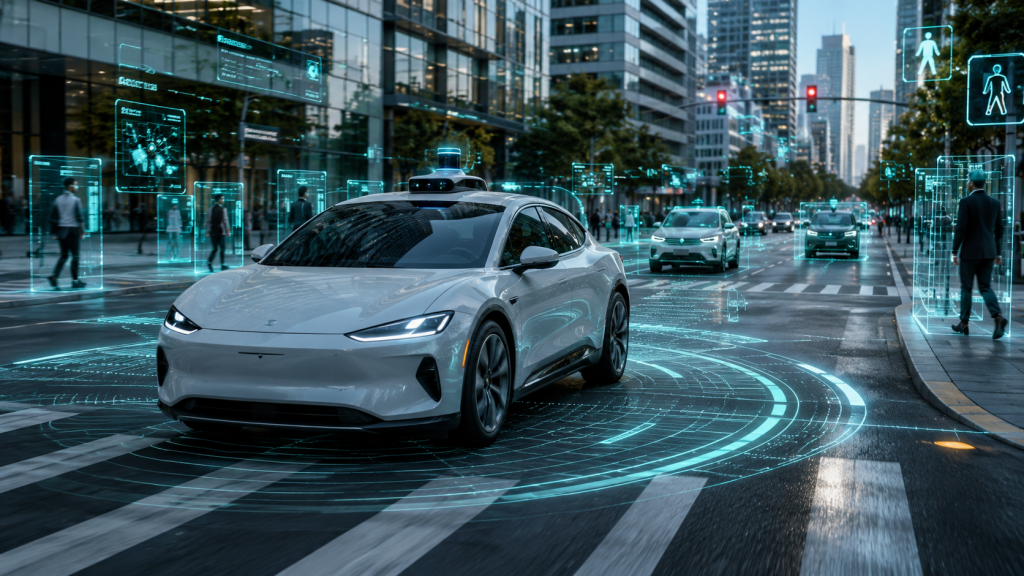
📍 The Bottom Line: Autonomous technology is improving rapidly, but the question isn’t whether computers can drive.’
It’s whether they can consistently outperform millions of experienced human beings in every imaginable situation.
The answer remains more complicated than the headlines suggest.
▪️The safest driver in the world never gets tired.
▪️Never glances at a text message.
▪️Never loses concentration after three hours on the M6.
▪️Computers are remarkably good at all of those things.
▪️Yet driving has never been simply about following the Highway Code.
▪️It’s about judgement, anticipation and reading the subtle cues that no sensor can fully interpret.
▪️A hesitant pedestrian, an impatient cyclist or the unmistakable body language of someone about to do something spectacularly daft.
♔ Where autonomous cars excel
▪️They don’t become distracted or drive under the influence.
▪️They react in milliseconds rather than fractions of a second.
▪️They continuously monitor their surroundings in every direction
▪️They learn from millions of miles of shared driving data.
♔ Where humans still matter
▪️Unpredictable weather and poorly marked roads.
▪️Complex roadworks and temporary traffic layouts.
▪️Ethical decisions when every available option carries risk.
▪️Reading human behaviour that defies logic.
♔ Why it matters
▪️For senior executives, the debate isn’t whether autonomous technology is coming.
▪️It already has.
The real question is where responsibility ultimately rests when software takes the wheel.
Until that answer becomes as reliable as the technology itself, the steering wheel may remain the most reassuring piece of equipment in any luxury motor car.
📍 ‘After all, even the finest chauffeur occasionally appreciates having an attentive passenger.’
