
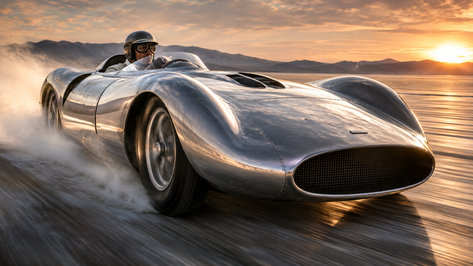
🚩 Why humanity keeps chasing the horizon — even when there is absolutely nowhere to go.
From the thunder of a Bugatti to the electric violence of a modern hypercar, our fascination with speed remains gloriously irrational.
We spend fortunes shaving fractions of a second off journeys we needn’t make.
Yet perhaps that’s the point.
Speed isn’t simply about arriving first. It’s about engineering, ambition and that delicious sensation of doing something extraordinary.
♔ Full Story |
▪️The Magnificent Madness of Going Faster
▪️In 1927, Henry Segrave exceeded 200mph at Daytona Beach.
A remarkable achievement, especially when you consider the brakes were far less impressive than the engine.
▪️Nearly a century later, we’re still at it.
The Bugatti Chiron Super Sport 300+ famously exceeded 300mph in testing. Koenigsegg and others continue pursuing the seemingly impossible.
♔ But why?
- Engineering: Every speed record pushes materials, aerodynamics and mechanical ingenuity further.
- Prestige: For manufacturers, outright performance remains the ultimate demonstration of technical superiority.
- Emotion: For enthusiasts, speed offers something no balance sheet can adequately explain.
▪️But the real fascination lies beyond the numbers.
▪️Segrave’s Sunbeam averaged 203.792mph in 1927, a feat of courage and ingenuity that remains extraordinary.
▪️Today, computers calculate what pioneers once entrusted to instinct, courage and occasionally questionable judgement.
♔ The Fisherley View: Speed has never been entirely rational. Nor should it be.
Because the moment humanity discovers how fast something can go, somebody invariably asks whether it might go just a little faster.
📍 ‘Preferably before lunch.’
