
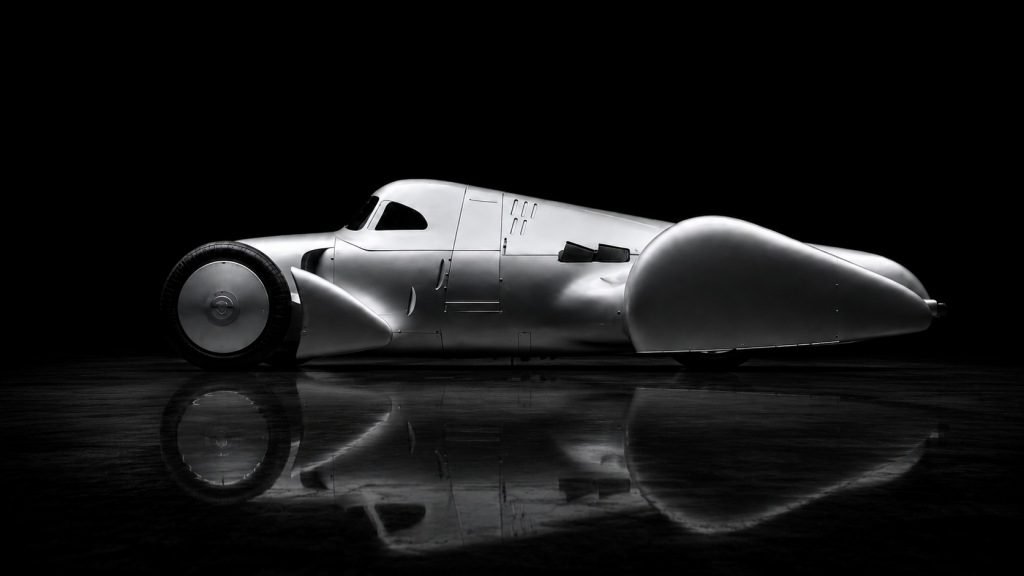
📍 ‘The original Auto Union Type C looked less like a racing car and more like something designed by a brilliant German engineer who’d been awake for three days and drinking strong coffee.’
Which, to be fair, was probably accurate.
Now Audi has revived the spirit of that extraordinary machine with the modern Auto Union Lucca.
And suddenly the past feels alarmingly fast again.
♔ The full story
▪️Before Formula 1 became an empire of carbon fibre and corporate hospitality, Grand Prix racing was gloriously unhinged.
▪️The 1930s Auto Union cars — rear-engined, supercharged and terrifyingly powerful — were driven by men who appeared to regard mortality as an administrative inconvenience.
▪️The original Type C, developed under Ferdinand Porsche, produced over 500 horsepower at a time when most family cars struggled to produce twenty.
▪️And now comes the Lucca.
▪️Audi’s modern interpretation is less a nostalgic tribute and more a rolling sculpture — low, silver, and impossibly dramatic, like an Art Deco locomotive designed for Le Mans.
▪️It borrows heavily from the Auto Union bloodline: sweeping bodywork, aggressive proportions and that unmistakable sense that German engineering can occasionally become slightly theatrical.
Thankfully.
▪️Because in an age where many performance cars feel digitally sanitised, the Lucca reminds us that speed should still carry a degree of menace.
▪️It should make you slightly nervous.
▪️Slightly emotional. Slightly irrational.
▪️Which is precisely why people fall in love with cars in the first place.
♔ Why it matters
The original Auto Union machines changed the history of racing.
📍 ‘The Lucca simply reminds us how intoxicating that history still feels.’
