
📍 ‘Last Sunday, 22 Formula One cars spent 78 laps driving around Monaco.’
Which sounds exciting until you realise that, for long periods, it resembled a particularly expensive traffic jam.
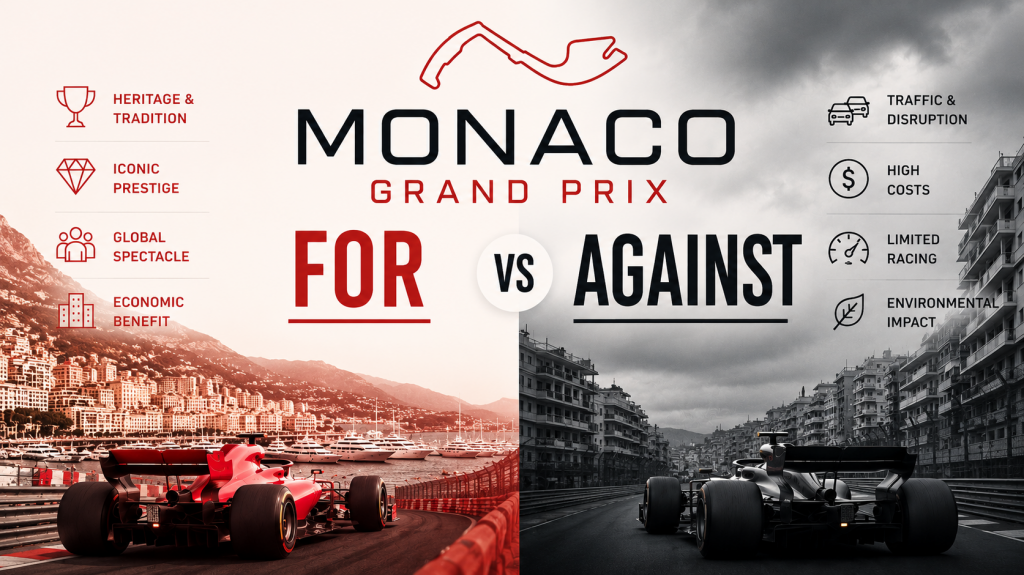
The annual debate has returned: should Formula One continue racing around Monte Carlo’s harbour, casinos and apartment blocks?
Or has modern F1 simply become too large and too fast for Monaco’s streets?
The answer depends on whether you believe Formula One is a sporting contest, a luxury brand, or perhaps a little of both.
♔ Read the full story →
◼︎ There is a compelling case against Monaco.
◼︎ Modern Formula One cars are enormous. Overtaking is notoriously difficult.
◼︎ Qualifying often determines Sunday’s result before the lights even go out. For those seeking wheel-to-wheel combat, there are better venues.
◼︎ Yet removing Monaco would feel rather like removing Centre Court from Wimbledon because the roof occasionally leaks.
◼︎ Monaco is not merely a race. It is Formula One’s shop window.
◼︎ The images are instantly recognisable: superyachts stacked like floating penthouses, helicopters crossing the harbour, champagne terraces overlooking the Mediterranean
◼︎ And racing cars threading impossibly close to the barriers.
◼︎ No other Grand Prix tells the world quite so effectively what Formula One aspires to be.
◼︎ Critics are correct that the racing can be processional.
◼︎ Supporters are equally correct that Monaco delivers something rarer: theatre, history and prestige.
◼︎ In a sport increasingly driven by data, simulations and commercial growth, Monaco remains gloriously irrational.
◼︎ And perhaps that is precisely why it still belongs on the calendar.
Because some races determine the championship.
📍 ‘Monaco defines the brand.’
