
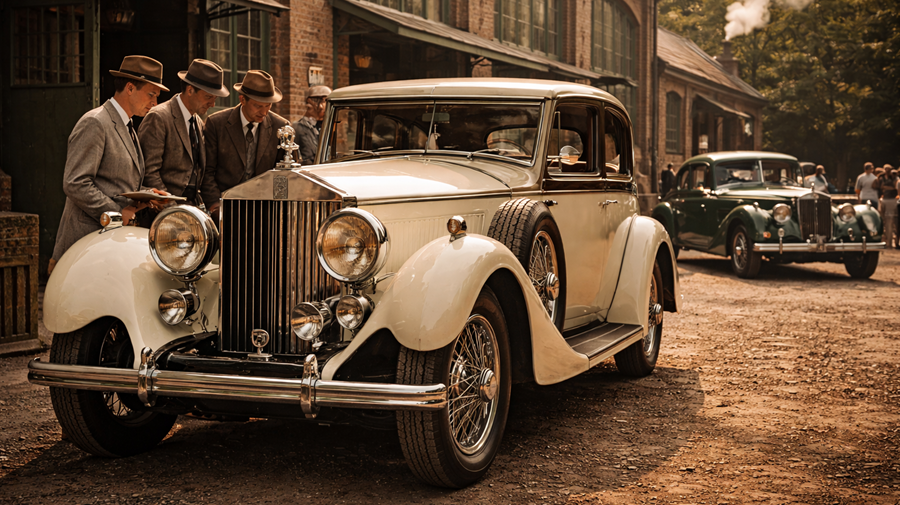
📍 ‘Rolls-Royce once feared speed.’
Actively distrusted it, in fact.
While rivals chased horsepower and glamour, Rolls-Royce worried that performance was a moral failing — a dangerous infection threatening its very soul.
History, as ever, had other ideas.
❖ The full story
In the years after the First World War, Rolls-Royce found itself facing a problem it had never quite anticipated: the world had changed, and so had its customers.
◼︎ Before 1914, the firm’s natural clientele was the wealthy, unattached Edwardian gentleman — young, well-heeled, and free to indulge mechanical interests.
By the early 1920s, he was becoming an endangered species.
Between 1914 and 1925, the number of people earning over £10,000 a year collapsed from around 4,000 to just 1,300.
◼︎ Far grimmer was the human cost: an entire generation of potential customers had been lost in the trenches.
Some 35,000 public-school boys were killed during the war — a devastating 18 per cent of those enlisted.
◼︎ Inside Rolls-Royce, the tension was palpable.
Younger engineers, increasingly aware of what Bentley and others were doing, privately dismissed their own products as ‘gutless wonders.’
This did not go down well.
◼︎ Claude Johnson, the formidable managing director, responded with fury. In a 1922 memo, he warned that ‘the serpent of speed has entered into this company and is likely to poison its existence,’ adding that anyone encouraging high-compression engines would be dismissed as an ‘unfaithful servant.’
Rolls-Royce, at that moment, believed silence, smoothness and dignity mattered more than pace.
The irony? The market was already moving on.
Why it matters
Rolls-Royce’s struggle reveals a timeless tension: when heritage hardens into dogma, innovation becomes rebellion.
📍 ‘Even the most revered marques must eventually choose whether to preserve the past — or survive the future.’
