
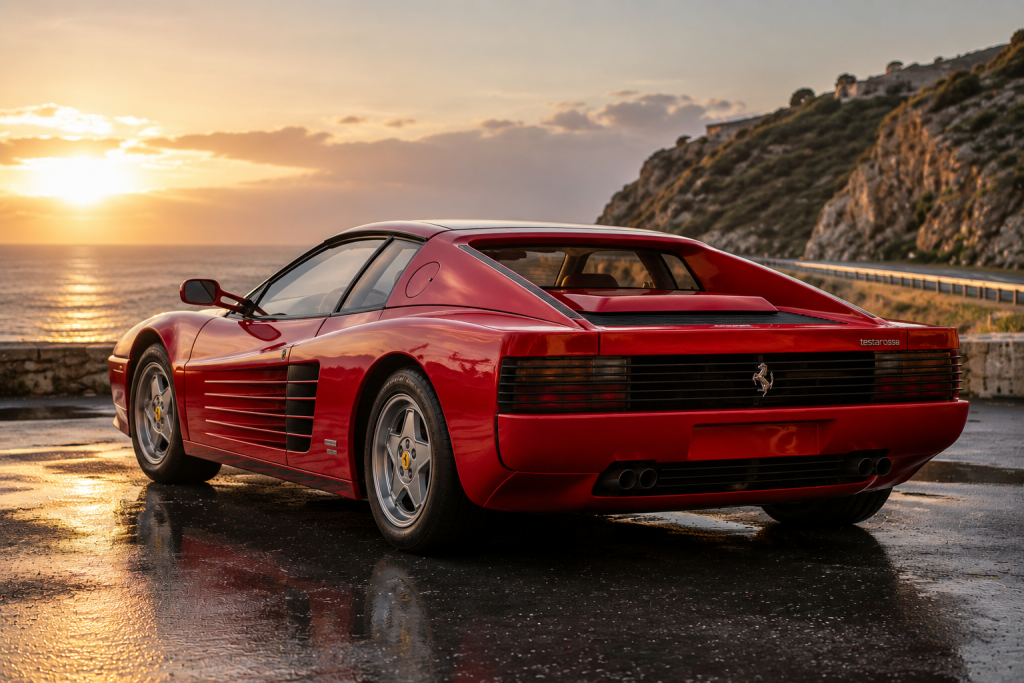
 ‘Every generation has its dream garage.’
For some, it was the poster of a Ferrari Testarossa above the bed.
For others, it was a Lamborghini Countach pinned to the wardrobe door or a Porsche 911 Turbo glimpsed in a magazine.
Back then, these machines were impossibly exotic.
They existed in a world inhabited by racing drivers, rock stars and City traders with very generous bonus schemes.
Forty years later, something fascinating is happening.
The teenage dreamers have become successful Gen X executives, entrepreneurs and investors.
And now they’re buying the cars they could only fantasise about owning.
♔ Read the full collector briefing →
 The collector car market is often analysed through spreadsheets, auction data and scarcity charts.Yet the most powerful force is usually nostalgia.Every generation has a ‘Dream Cars’ class — those machines that defined ambition during formative years.In the 1980s and 1990s, it was the era of wide-body supercars, turbocharged heroes and bedroom-wall legends.Cars that could reduce teenage boys to jelly-legged admiration at fifty paces.Today, those same admirers are typically in their fifties and sixties, enjoying the peak of their earning power.
♔ That matters.
Because collectors rarely buy with pure logic. They buy memories. They buy aspiration. They buy the feeling of being fifteen years old again.The result is a powerful demand driver. As wealth accumulates within a generation, capital naturally flows towards the objects that shaped its ambitions.It explains why icons from the 1980s and 1990s continue to attract buyers, despite their advancing age.The lesson for collectors is simple: today’s dream car often becomes tomorrow’s investment category.♔ Markets move on numbers. Collectors move on emotion.
‘The smartest investments often sit somewhere between the two.’