
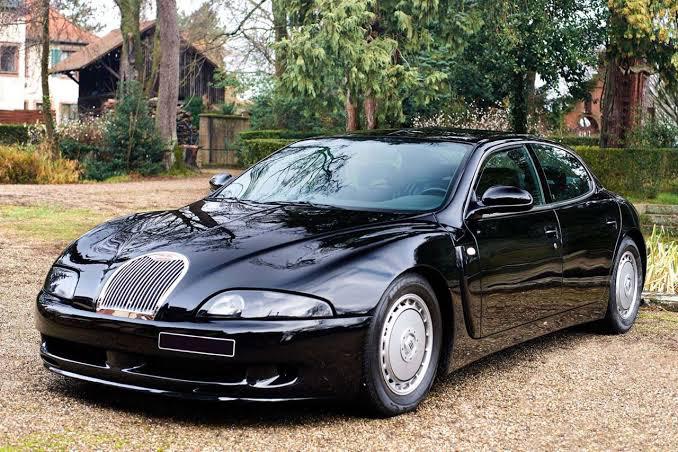
🚩 ‘A Bugatti for the boardroom, not the autobahn.’
▪︎ 1991: Romano Artioli resurrects Bugatti with the EB110 — bold, mid-engined, carbon-fibre excess
▪︎ 1993: At the Geneva Motor Show, the EB112 appears — a four-door fastback with quiet menace
▪︎ Designed by Giorgetto Giugiaro — elegance with echoes of Bugatti’s grand past
▪︎ Front-mounted 6.0L V12, AWD, manual — a limousine with supercar DNA
▪︎ 1995: Bankruptcy halts everything; vision freezes mid-creation
▪︎ Later: Gildo Pallanca Pastor completes just three cars
‘A Bugatti you could drive to a board meeting — and still arrive like a storm.’
♔ Full Story
▪︎ Early 1990s: Bugatti’s rebirth wasn’t modest — it was theatrical
▪︎ The EB112 took that ambition and aimed it at a different audience: captains of industry
▪︎ Instead of mid-engine drama, the EB112 placed its 460hp V12 up front
▪︎ Power went to all four wheels via a six-speed manual — deeply unfashionable now, deeply desirable today
▪︎ Giugiaro’s design avoided vulgarity
▪︎ A central spine and split rear window quietly referenced the legendary Type 57 Atlantic
▪︎ The stance? Less supercar, more sovereign authority
▪︎ Then reality intervened
▪︎1995: Bugatti collapsed, leaving the EB112 as an exquisite ‘what if’
▪︎ Only three were ever completed — each one a ghost of a different future
▪︎ A world where Bugatti rivalled Bentley in the boardroom, not just on the poster wall
♔ Why it matters:
▪︎ The EB112 predicted the modern ultra-luxury performance saloon decades early
▪︎ Think less limousine, more discreet thunder
📍 ‘A Bugatti not for showing off — but for quietly owning the room.’
