
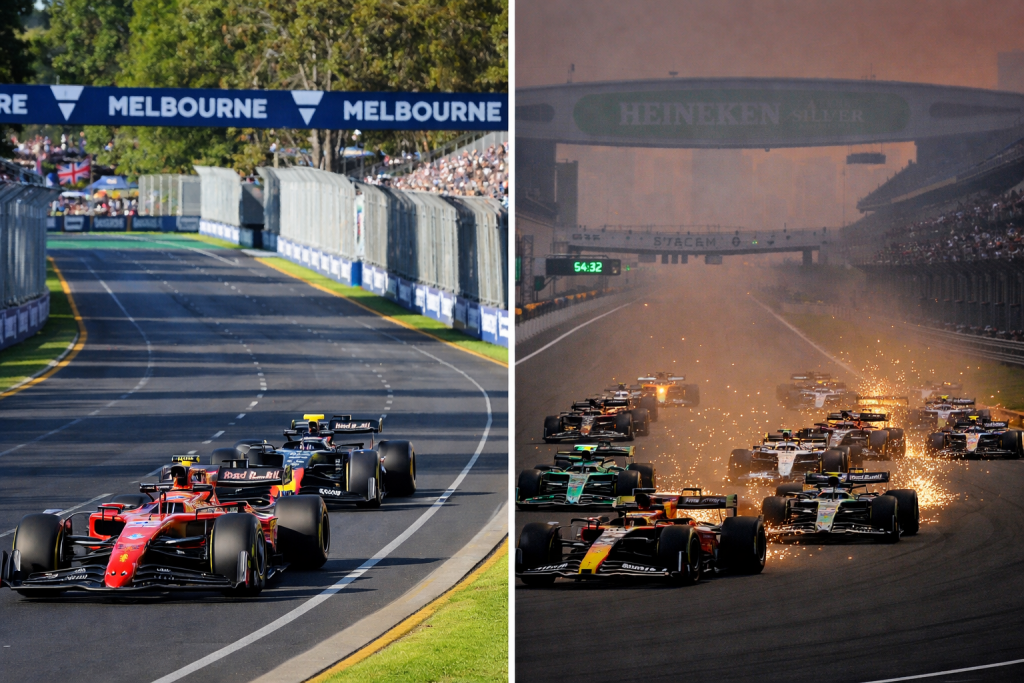
📍 ‘Melbourne felt like theatre without tension. Then Shanghai quietly rewrote the script.’
- New-era Formula 1 revealed its sharp edge: energy, not bravery, now dictates the duel.
- Overtakes came in waves — but so did vulnerability.
- Deploy too early, and you become prey before the straight even ends.
The combustion engine still roars — but it’s no longer the lead actor.
Full Story
The shift:
- Melbourne raised eyebrows — processional, predictable, oddly sterile.
- Shanghai offered a counterpoint: dynamic, tactical, unexpectedly tense.
- Not chaos, but calculation — and that’s where the intrigue lies.
What’s changed:
- Electrical deployment now decides who attacks — and who is defenceless.
- Roughly 450bhp of deployable energy swings the balance in seconds.
- Use it to pass, and you risk immediate retaliation.
What we saw in Shanghai:
- Drivers trading positions not through bravery alone, but timing
- Overtake → depletion → immediate counterattack
- A rhythm closer to endurance racing strategy than traditional sprint combat
The uncomfortable truth:
- These are no longer pure slipstream-and-brake duels.
- When one car suddenly ‘loses’ nearly half its usable power mid-straight, the outcome feels… engineered.
- Aerodynamic drag plays a lesser role, making energy disparity even more decisive.
The bigger question:
- Is the field chasing the car ahead…
- Or chasing an invisible algorithm dictating when they’re allowed to win?
Why it matters:
- Formula 1 hasn’t lost its edge — it has relocated it.
- The hero is no longer just the late braker, but the energy strategist.
- The danger: brilliance risks becoming invisible to the casual eye
Bottom line:
- The internal combustion engine still sings.
📍 ‘But the conductor now sits in a battery pack — quietly deciding the outcome before the corner even begins.’
